The Case Against Universal Healthcare

One of the most polarizing issues in American politics leading up to the 2020 presidential election is that of American Healthcare. Liberals make the case for needing universal healthcare, while Conservatives in line with their economic beliefs are fighting to keep healthcare privatized.

The average American surely looks at this topic as a no-brainer. What could be wrong with providing healthcare to everyone who wants it? That question is what I’ll be discussing with you today.

First; “Medicare for all,” as Bernie Sanders has called it, will not come without a cost. You may ask, “Who will bear the burden of paying the medical charges that come with universal healthcare?” It will come from increased taxes placed on you. Effectively making a universal healthcare system more expensive than a private one for the majority of Americans.

Second, the main argument in favor of healthcare for all is that it will save more lives. That notion is entirely false.

Universal healthcare will overburden healthcare system. This excess amount of work put upon medical professionals who are trying to get many more people in and out of offices leads to more grave errors, simple mistakes that would not have been made in the private healthcare scenario.

A 2013 study found that death rates in the National Health Service (NHS) in the U.K. were 45 percent higher than in American hospitals. A large number of those deaths could have been avoided, according to the London School of Hygiene and Tropical Medicine, which concluded that 750 patients a month or 1/28 die from lack of care or mistakes that could have been prevented within the NHS.

A universal healthcare system causes an overwhelming amount of people to be scheduled to the same doctors, creating a situation where the doctor can be booked out for months and unable to see patients for that length of time. This problem also causes even the best doctors to make mistakes as they try to make their appointments go more quickly.

Another note that follows this thought, is that no one with a life-threatening condition will ever be denied treatment. All emergency rooms are required to treat any condition that threatens the life of a person, regardless of their ability to pay. So rest assured, no one is being turned away and dying on the streets because they cannot pay for treatment in the United States.

Third, against everything the left has told you; health care is a commodity provided by a third party, not a human right. The sooner governments and people realize this, the better.

A human right has been available since the creation of Adam and Eve. The right to speak your mind, the right to defend yourself, the right to pursue happiness and to live. These have all existed for the full existence of humanity. Healthcare did not formally exist until the last century.

Healthcare is like food: humans need it to survive, but even though it can be a necessity, you still can’t morally steal food. If everyone who needed food stole it, there would be no incentive for businesses to produce and provide food.

Universal Healthcare disincentives the medical professions. As soon as it becomes a human right, then the people can demand treatment at any price they see fit. This will lead to many hoping to practice medicine to search for more lucrative careers and professions.

One real argument that many have put against the private healthcare system is that of pre-existing conditions. I, as a diabetic, find myself thinking about being denied healthcare because of the reason I need it. Fortunately upon closer inspection. This is not the case. As in many economic situations. The capitalistic concept of Laissez-faire has worked this out. The free market has thusly created a system by which those with employer-based coverage don’t need screening for pre-existing conditions because the insurance we get will be purchased in bulk by the employer. For those with employment-based coverage ( roughly 50 percent of those with insurance), pre-existing condition exclusions can only be triggered if the client has had health insurance for less than 12 months. This encourages and rewards those who buy long-term medical coverage (which promotes good life choices and planning) as opposed to those that only buy insurance when they get ill.

If what we are seeking is a short-term, low quality, but available health care we could opt for a universal system of coverage. But if we want a long-term, affordable and high-quality health care system that relies on personal responsibility, protects individual rights and incorporates basic supply and demand economics, then privatization is the way to go.

So, if you seek affordable and effective healthcare, know that what you’re seeing from the democratic debates is not true. The best form of healthcare is private, not universal.

 

Forced Termination, a Bipartisan Step in the Wrong Direction

The United Kingdom, to most Americans, is a relatively moderate country on most political issues (besides arm bearing). Thats why a piece of news coming out of London has shocked people around the world.

The news that a mentally disabled woman in London will be forced to terminate her pregnancy act 22 weeks has horrified members of the pro-LIFE movement around the world. That’s not all though, the pro-CHOICE movement has also been reeling by such a decision. Especially since it is apparently against the wishes of the woman to have the termination.

The judge who ordered the termination had this to say about the ruling:

“I am acutely conscious of the fact that for the state to order a woman to have a termination where it appears that she doesn’t want it is an immense intrusion,”

There is more than meets the eye to this story though, upon further delving into the facts, we learn that the woman has the mental and cognitive ability of a 6-9 year old child.

The judge said in light of these facts that she had to act in the woman’s “best interests, not on society’s views of termination.”

No matter which side of the aisle you associate with, this raises some serious questions about the role of government. These questions and the precedent this court case provides, should alarm people everywhere.

For the right, government is here essentially just to protect the natural rights of the individual. For the left, government is exists to expand the options available to the governed. For both sides. Government force is not desired. (Remember, this woman committed no crime, which makes this case different to any criminal court case where government does have the duty to enforce.)

The woman has the capacity of a minor, but is not legally a minor. She had her family’s backing for having the child. She was also capable of coming to the decision to keep the baby. Add to this that her family supported her choice to deliver the baby, and you have one complicated legal and political debate for the future.


Surprise Bills, a Secret of the ER.

Everyone in America knows at least a few people who have been hospitalised. In fact, nearly every American has been hospitalised at some point in their life. It should come as a surprise to all of us then, that 1 out of every 6 hospital visits will trigger what is known as a “surprise bill”

The Kaiser Family Foundation, a bipartisan foundation, recently released a report which found that millions of Americans who have what is considered “Solid” coverage will go to the emergency room for treatment and then be exposed to “out of network” fees and charges. These can cost the individuals and families thousands of dollars. Even after the hospital has accepted some money from the individual’s insurance company.

I have personal experience with these surprise bills. At the beginning of 2018, I was      experiencing issues relating to a surgery I had received, after visiting an Urgent Care facility inside of a hospital, they sent me straight into the emergency room. On the way there I was assured that it was “in network” and that my insurance would be able to cover my visit.

Fast forward, and my family and I were notified by Intermountain Healthcare that we now owed $1,985.00 for that emergency room visit.

In the following days we contacted our insurance company, finding out that they had paid the amount they always pay for ER visits.

So, why was I facing this nearly $2,000 dollar fee? Because the Emergency Room visit was actually “Out of Network” despite being promised multiple times by the ER and Urgent Care faculty that it was “In Network.”

There is good news, however, for the millions of Americans who face a similar situation to mine:

Next Wednesday, the Senate Health, Education, Labor and Pensions committee plans to vote on bipartisan legislation that would limit what patients can be charged to their in-network deductibles and copays. The bill from Sens. Lamar Alexander, R-Tenn., and Patty Murray, D-Wash., would require insurers to pay out-of-network doctors and hospitals the median — or midpoint — rate paid to in-network providers. The House Energy and Commerce committee is working on similar legislation. President Donald Trump has said he wants to sign a bill. (According to Associated Press via KSL).

The majority of Americans and insurers support the bill. Hospitals and doctors are opposed and are seeking to fight the legislation back. They instead seek to set up an arbitration system, which is potentially effective but also has potential to create a new, costly, American Bureaucracy.

This is just another part to an ever-growing issue in America, overpriced medical care. From drug pricing to seeing a specialist, I am a supporter of capitalism. These thing require expertise from the men and women in these careers, and they deserve to make money from the important jobs they perform. They should not, however, cause their patients and buyers harm by overcharging for their provided goods.

Those in medical professions swear to live the Hippocratic Oath which simply states in the original version; “First, do no harm,”

Abandon the Hyde Amendment? A question of ethics.


https://www.latimes.com/politics/la-na-pol-essential-politics-20190607-story.html

(This is not my view on abortion, as abortion is a complex issue, however I do support abortion in cases of rape, incest, and saving the life of the mother)

If you’ve been following the democratic presidential election trail, one issue has been recurring most frequently. Abortion.

Abortion as an issue has split Americans down the middle. From abortion at point of birth to the banning of abortions completely, America will likely never reach a consensus.

A new talking point related to abortion has been in the news recently, and you’d be forgiven if you had never heard of it before.

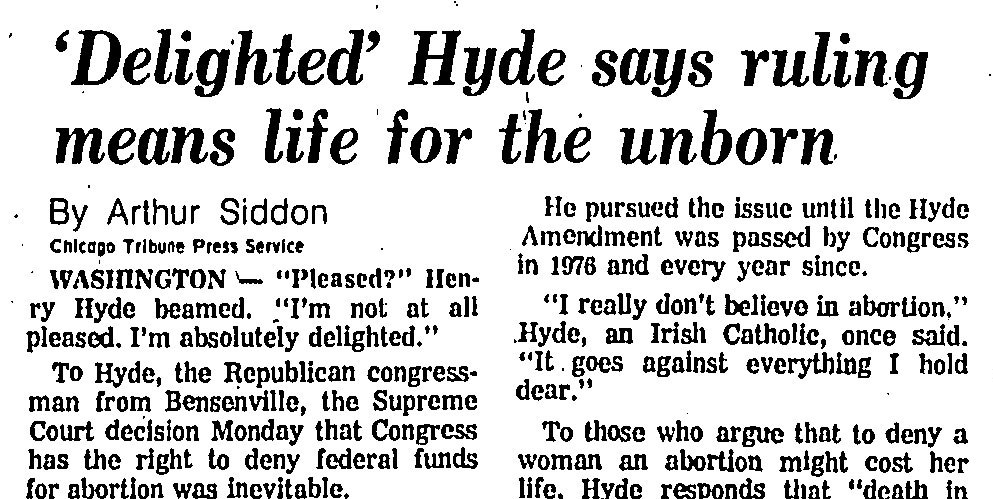
The Hyde Amendment was conceived from the mind of republican Rep. Henry Hyde of Illinois. Hyde was an opponent to the abortion cause, the restriction that bears his name drew support for years from a much broader swath of opinion. Backers argued that in a country with a wide divergence of views on abortion, taxpayers should not be forced to pay for a procedure that many regard as immoral.

The amendment has been featured in the news recently because former Vice President Joe Biden, who has long supported the amendment recently flipped multiple times on the topic int he space of a week. This was because of increasing pressure because of the increasingly radicalised left (The Left and Democrats are not the same thing).

To explain further, the Hyde Amendment basically states that taxpayers should not be forced to pay for elective abortions (As stated above). This is because those who do not support abortion should not be forced to pay for them to occur and secondly, because abortions in many cases are an “elective” procedure, which means that there is no danger to the life of the person, it is just a want instead of a necessity.

Importantly, taxpayer money could still be spent in the case where an abortion is not elective, any real danger to the long-term health and life of a patient can be covered by taxpayer money if needed.

Abortion itself is an intensely complicated subject, one that has so many factors that it is hard to take them all in, however, the Hyde Amendment itself is less complicated.

It’s difficult to come up with a logical argument for abandoning the Hyde Amendment, and it is perhaps more difficult to find an ethical argument.

To reiterate, The Hyde Amendment bars the use of federal funds to pay for abortion except to save the life of the woman, or if the pregnancy arises from incest or rape.

So, the difficulty arises comes from a scenario like this. If I want to get a new nose via plastic surgery, should you have to help pay for my new nose? The answer to this is obviously no.

If I had to have surgery to remove a brain tumour which would kill me, the answer could easily be yes, but an unnecessary surgery especially in a case where being responsible could’ve prevented the whole situation is different.

Further, forcing taxpayers, many of whom see elective abortion as morally apprehensible, to pay for what they see as wholly immoral is immoral in itself, and was the origin of the Hyde Amendment in the first place.

Elective surgery should not be covered by anyone but the person electing to receive said surgery.

America cannot afford to keep freeing people from individual responsibility


The Other F-Word

It has never been appropriate to call someone this F-word, fat. At least not someone you are not intimately close with.

We in America, including myself, spend a lot of time worrying about self esteem. The worries range from our children not having sufficient self esteem, to us not loving ourselves properly, even to the people around us not validating our choices and in turn, hurting our self esteem.

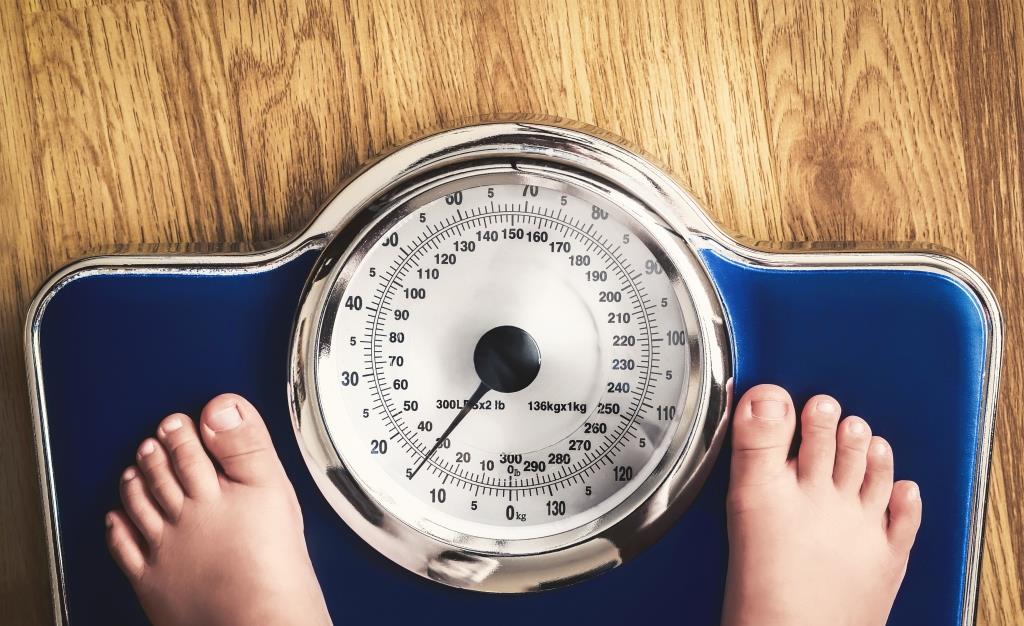
There was a study done in England where 16.5K overweight British adults were surveyed. They were asked to guess their own weight without measurements, and 60% of those surveyed predicted their weight to be less than their actual weight. The ultimate findings of the study were: “that people who improperly assessed their own weight were 85 percent less likely to try and lose weight.” Logically, this works out. Why lose weight, when you’re already perfect in your own mind?

The conclusion however, only raises further questions. Why, if these findings are accurate, are we overly-encouraging body positivity, if that positivity will only make our problems worse?

My view is not that we should body-shame. To the contrary, no one should ever be shamed because of their body. Treating others with kindness is just a basic moral principle to which we all should adhere. “Fat-shaming” is counterproductive, nasty stuff. Just like with underestimation of weight, fat shaming inevitably leads to: “psychological distress, unhealthy behaviours, physiological stress, and weight gain,” according to Dr. Puhl at the University of Connecticut.

Now, with that clarification, it is equally counterproductive to praise someone for things which they ought to change. If I were praised for not taking care of my diabetes, why would I ever feel as though should change and start taking care of myself?

The unfortunate thing is that in the United States, with the spread of secularism, self esteem is seen as the “ultimate good”. This, in part, comes from a falsified study that claimed to trace nearly every issue, from anxiety to cancer, back to low self esteem.

Pop culture has furthered the idealisation of these things, Amy Schumer for example advocates for just doing what you want with no care for what the effects could be. This is a dangerous position and one that could have much worse negative effects than just low self esteem.

We in the US do not see the risks when we promote “fat-promotion,”. Obesity leads to Type 2 Diabetes, infertility, and heart conditions. Serious conditions that can eventually lead to a premature death.

Society has been quick to embrace the self-esteem movement, the notion that everyone’s feelings are to be honored in order to prevent crucial loss of self-esteem.

This is not particularly helpful when it comes to fixing personal problems. In fact, a lack of unearned self-esteem is often useful in overcoming those obstacles. You should feel good about yourself when you’ve accomplished something. That is how our brains are programmed. Again, that doesn’t mean that we should shame people who can’t change themselves. But doing the opposite and praising people for failing to make better decisions isn’t likely to create an environment where people are incentivised to make healthier decisions. It’s likely to reinforce the notion that nothing needs to change. And sometimes something needs to change.


Anti-Vaxers: A Terror on Science and Medicine.

For me, it seems almost unreal that we are still combating the illegitimate and incoherent arguments made by anti-vax parents. However, just like the viruses they’ve subjected themselves to, they somehow persist.

The Anti-Vaccine Activists have, in effect, taken science and medicine hostage. The pro-vaccine logic and arguments  are overwhelming. Truthfully, there is (almost) no reason for anyone not to take advantage of the miraculous vaccines that are available around the western world today.

Fear, for all of human history has made people act irrationally. This is again the case with vaccines. The fear in this instance is that vaccines, somehow, are dangerous and cause an issue much worse than the ones they prevent. In reality though, it is the opposite. Many will remember back to 2015 when Disneyland experienced a measles outbreak. At least 125 people were sickened by the disease, with nearly all of them being unvaccinated.

I have written at least one other article highlighting the importance of vaccination. Specifically the dangers it can pose to others around the unvaccinated persons. However, the idiocy does not stop.

The madness that has torn across the world began with an article that has since been debunked over and over again. There is no doubt of the falsehood in the claim that autism is caused by vaccines, in the scientific community that is.

The fear is coupled by the popular desire of many mothers to be a unique ‘blogger mom’. That desire is wholly disgusting, dangerous, and vile. Parents who reject science in order to be different and “cool” are putting their kids and others around the country in danger for their interest in popularity.

Logic in this situation, as is becoming ever more common in the modern world, does not seem like a feasible solution.


Our Need to Outadapt Nature

Medicine is beautiful, one of the keys to humanity’s dominance over the earth. It has kept  alive longer, has increased quality of life, and in turn has led us to more productive lives that help to continue our dominance over nature.

However, nature hasn’t just rolled over and submitted, there are still an overwhelming about of antigens and autoimmune disorders around to keep all of us on our toes. Diabetes, Cancer, AIDS, and SIDS, just to name a few.

We’ve grown comfortable though, those aforementioned diseases are not extraordinarily common, so the majority of the human race can afford that comfort.

Enter: Candida Auris.

Candida Auris is a fungal infection from (and excuse the profanity) Hell. Its rising prevalence has caused quite a stir in the medical community, and in turn, the media.

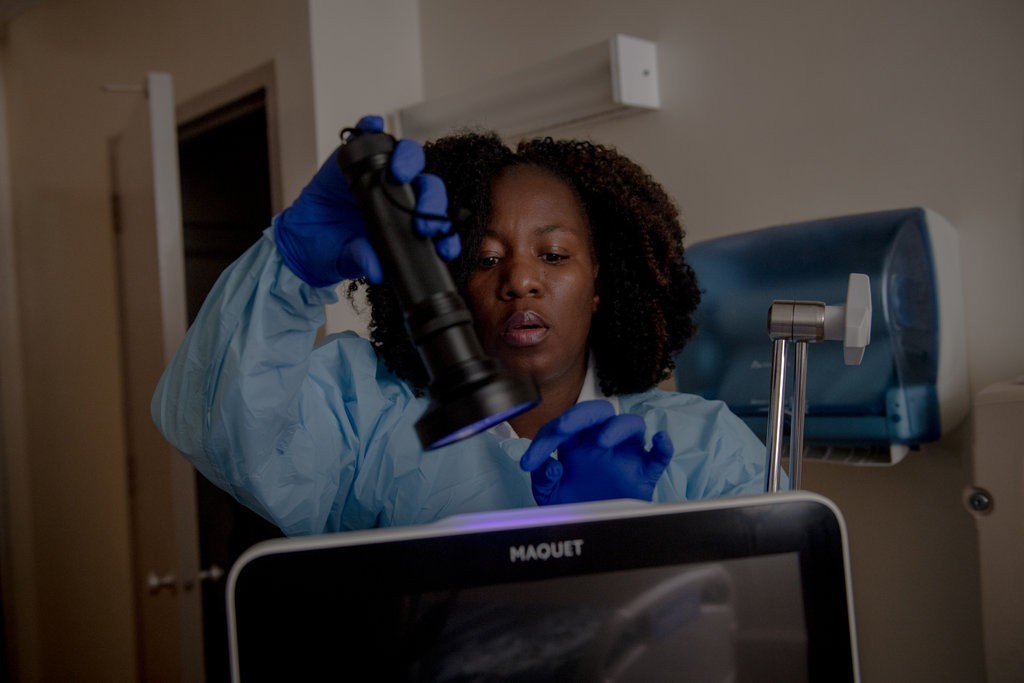
This, like other fungi, enters into the bloodstream and causes dangerous, potentially fatal infections. The difference between Candida Auris and many other fungi is: Candida Auris is among a growing number of germs that are resistant to anti-fungal medication. It and these other germs have evolved past both our natural defences and our synthetic, man made ones.

So what does this mean?

C. Auris is currently a low risk disease, it’s still relatively uncommon. Those at risk are generally people with already weakened immune systems.

However, as these super-bacteria become increasingly common, it will become necessary for our medicine to out-adapt nature. This means we need more, and better doctors who will be able to find innovative solutions to complex issues such as C. Auris.

The Dehumanization of Humanity

On April 2nd, a woman in Nebraska gave birth to her own granddaughter.

Cecile Eledge was the surrogate for her son and his husband. To further the oddness of this story, the egg for the surrogacy was provided by none other than the daughter of the surrogate who, if you’re following carefully now, is the sister of one of the husbands involved.

As a disclaimer, this article is not a protest against homosexual couples being able to raise children or their capability to do so.

The issue I personally take with this comes partially from the language used by the couple to whom the child will belong, and also the future relationships the child will have.

Here are two of the quotes from those involved.

“The cost of transferring an embryo is not expensive,”

“Each cycle of egg retrieval and transfer can cost about $12,000, which we only had to pay once, since she got pregnant for us on the first try.”

For someone like me who would identify as extremely religious, the creation of a child is seen as the ultimate expression of love. The literal, physical combination of two souls, when done properly. This talk of the cost of egg retrieval, the transfer of embryo, and the creation of a synthetic genetic connection just doesn’t sit well with me, and deep down,  doesn’t sit well with many people of many cultures around the country.

Secondly, this specific situation doesn’t resonate well because of the future relationships that this child will have. The mother will not provide a maternal relationship with her daughter, she will instead, play the role of an aunt. She will step back out of the life of her daughter. The grandmother, who carried the child to term, will also have a confusing relationship with her granddaughter, putting her in a unique, and perhaps uncomfortable position. I can’t imagine carrying a child for 9 months, then having that child living in close proximity, and not having maternal instincts for that child that to an extent, must be held back in order to be “politically correct.

The creating of offspring is the most human experience that we can have on earth, this specific instance uniquely takes away from the natural portion of it, causing unnatural relationships through the relationships of those involved and the unnatural vocabulary used by those people.

I’m just happy that I won’t have to look back and figure put the family tree into order.

Is this okay in your opinion? Am I being hyper critical?

Pro-Life: The Argument

In political arguments involving health care, there is a necessity for open, respectful and non-judgmental discourse. This is the argument for life, I will treat opposing opinions with respect, and I hope for readers to give me the same courtesy.

Scientifically, it is impossible to conclude exactly when a fetus becomes a human being and gains “personhood.” Because this is the case, we face a critical dilemma. Potentially deny women the opportunity to make a choice, or potentially end a life.

Let me first say, no one comes into the pro-life side of the debate and is of the opinion that women should not have full freedom to make choices, this is not a movement to degrade and suppress women.

Back to the dilemma mentioned earlier. Because there is now way to assuredly know when life begins. We, just like in math, must assume the lowest common denominator. That is conception. This point, clearly makes the “most” morally correct choice, Pro-Life.

Many of those who find themselves in the Pro-Choice camp ask; “Even if you support life, why not leave the choice to the mother, not the government?” On the surface at least, this is a decent question.

My answer somewhat follows the libertarian train of thought. People are generally good, however, government exists to both protect rights, and more importantly, to protect the lives of the governed.

As someone with libertarian views, my greatest desire is that we retain choice as individuals. However, that freedom only extends until we negatively effect the life’s of others. A lack of this second point is not libertarianism, but anarchy.

Since Roe v. Wade, it is estimated by the C.D.C. that 60 Million abortions have been carried out. About 700,000 a year.

Those who are Pro-Choice like to make their argument rape, incest, and threat to life centric. However, these three numbers only make up 5% of abortions preformed each year. 90% or 630,000 abortions every year are considered “elective.”

These numbers don’t make sense, since a homicide of a pregnant mother is punishable with the sentence of “DOUBLE homicide.” Imagine the good that those 630,000 people could do. The potential is staggering. Perhaps we’ve missed finding a cure to diabetes, cancer, or AIDS because the person who would have accomplished this wasn’t allowed to live.

Please know, I am not an angry, patriarchal conservative. As far as feminism means equal social status and treatment in the workplace, I am one. I am a member of a group who strives for obtaining equal rights for all. Especially those who are the most vulnerable, the unborn.

Health Care to Crisis

*Sadly, the photo above is real, and comes from a public hospital in Barcelona, Venezuela.*

Amid a time where socialist policies are receiving historic amounts of support in the United States, many are focusing on the positives that can come from a socialist healthcare system. With all the good, we seem to have forgotten to look at the negative side.

Venezuela is receiving universal criticism for its food shortages and poverty, these have been wrought out of a country that used to be the wealthiest in South America because of its adoption of socialist policy.

One aspect that hasn’t receive much attention in Venezuela is the state of its healthcare. It too is socialist, meaning that it at least theoretically has a universal healthcare system.
Universal healthcare in Venezuela has caused one of the gravest humanitarian crises seen in the region, one that has been deepened by the imminent breakdown of the public health infrastructure and shortages of food, water, electricity, medicine and basic medical supplies.

The socialisation of medical care in Venezuela has seen doctor’s salaries decrease drastically, causing many to shut down their practices. between 2014 to 2018, 14% of instacare facilities were shut down across the country. With shutdowns of other general and specialist practices nearing the same stats.

With the deprivatization of healthcare occurring in 2014, just one year later, the country reported that 15,000 doctors had left the public health care system; citing shortages of drugs, equipment, and poor pay as reasons for there abandonment of the public medical field.

Said one medical journal: “We have rarely seen access to essential medicines deteriorate as quickly as it has in Venezuela except in war zones.” By the end of 2015, the Bolivarian government reported that of all Venezuelans visiting public hospitals in the year, one-of-three patients died

Also in 2015, Venezuela had 30% of all reported malaria cases in the Americas and more even than Brazil, which has a much larger population

There is a private healthcare system in Venezuela, private hospitals and clinics and the qualifications of their medical personnel are comparable to U.S. standards. Private health services are “full to bursting.” Because of a lack of private hospitals in the country, and because the care is objectively better. Overall roughly 1 in 5 Venezuelans have private health insurance. This is caused by a difficulty in getting access to privatised healthcare created by the government in order to keep money flowing in.

Venezuela’s healthcare system is in crisis, and even if it survives, it will never thrive without outside emergency attention.

Leave your comments below.